 Sign In










Key Takeaways
- Effective lead magnets solve a specific problem and provide immediate value that aligns with what the audience is already interested in.
- The best lead magnets are highly relevant to the content users are currently reading, making them a natural next step in the customer journey.
- Understanding your audience is essential for creating lead magnets that convert, and researching what people already pay for can help validate ideas.
- Content upgrades, checklists, guides, and downloadable resources can dramatically improve opt-in and conversion rates when integrated strategically into blog content.
- Successful lead magnets focus on clarity, usefulness, and solving real customer pain points rather than offering generic information.
- Gathering feedback before launching a lead magnet can improve its effectiveness while also building anticipation and interest among potential subscribers.
Getting traffic to your site is nice, but there’s not much of a point if those visitors don’t convert.
There’s one tactic I use above all others to generate new leads:
A lead magnet.
They aren’t some newfangled tech trend. They’ve been an essential marketing tool for decades.
With lead magnets, you give people something for free in exchange for an email address and permission to send them more offers—for example, a free ebook or an SEO checklist.
However, not all lead magnets are effective.
Let’s take about how lead magnets work and explore how to create one that drives leads.
How Lead Magnets Can Grow Your Business
The lure of ‘free’ is compelling, according to Predictably Irrational author Dan Ariely.
He proved this by giving groups of people the option to select from different Amazon gift cards. Respondents could choose from receiving either:
- A $10 Amazon gift card for free, or
- A $20 Amazon gift card for only $7
If you were to look at that objectively, based on cold hard math, you’d see that the second option was the better value ($13 vs. $10.)
Check out the third column on the far right to see which one won:
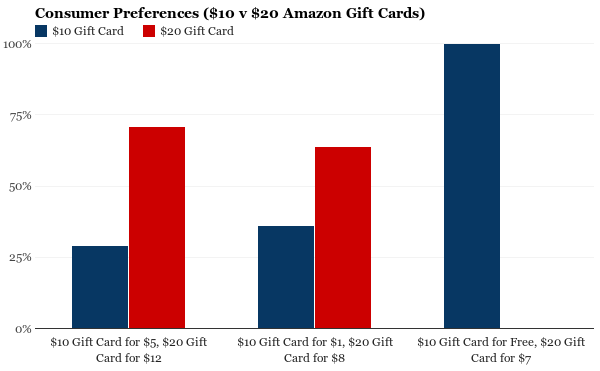
It wasn’t even close! Everyone sampled chose the free $10 option instead.
Ariely calls this the Zero-Price Effect because humans don’t see the downside to something that’s free.
Ariely ran a related experiment. They staged a promotion for free tattoos and had people line up outside the store.
These people were waiting in line with full knowledge of what they were doing.
Yet when Ariely asked them if they’d be waiting to get the same tattoo if it wasn’t free, 68 percent of respondents said no!
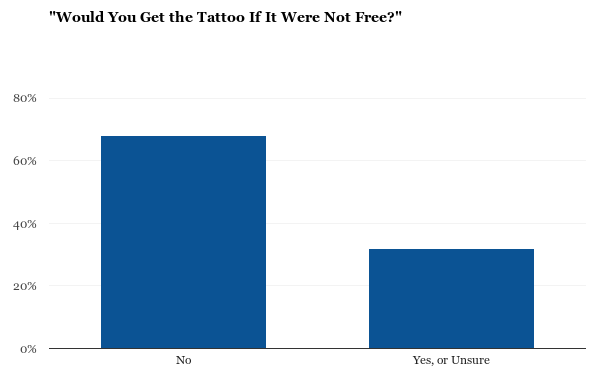
In other words, people took time out of their busy schedule to commit permanent ink to their skin simply because it was free.
Good lead magnets, when done correctly, have the same effect (albeit without the same long-lasting effects).
They pass along a useful ebook, webinar, or email course, asking for very little (if anything) in return from visitors.
You leverage the power of free to kickstart the first step in your customer value optimization process.
Lead magnets are nothing new.
They get a lot of attention today because of how persuasive and powerful they can be.
One of the best ways to incorporate them today is with a content upgrade. People are already on your site, seeking something out.
Think about it:
They went to Google and typed in something specific to end up on your blog post.
A lead magnet sweetens the pot by providing additional insight on the same exact topic they were reading about.
Brian Dean used the content upgrade strategy to boost his conversions by 785 percent in one day.
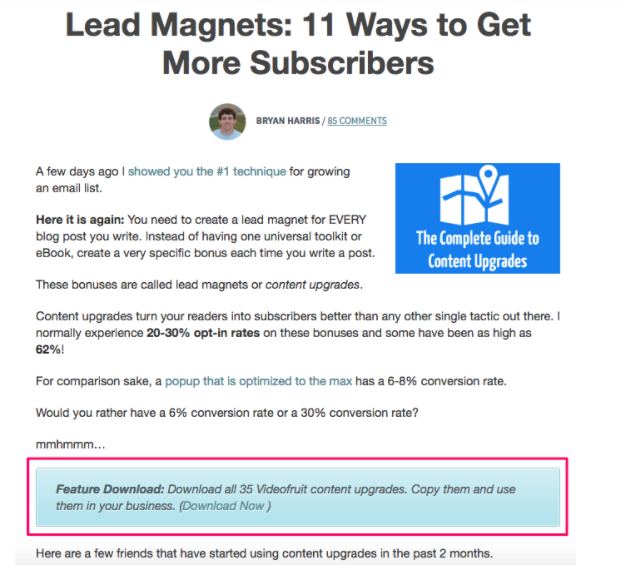
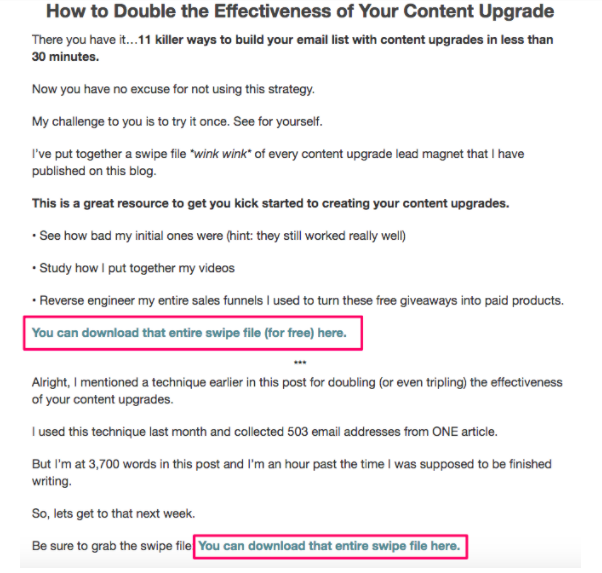
Brian Harris of Video Fruit is seeing a 20-30 percent opt-in rate from blog posts where he links not one, not two, but three times to his lead magnet.
For example, the first comes right in the introduction:
Then he follows up that up with another two more for good measure down at the bottom:
The blog post goes through an in-depth analysis of how content upgrades can get you more leads. Then it distills those insights and actionable tips down so that you can easily start implementing the same tactics on your site (after downloading the lead magnet, of course).
If you want to see the same results, your lead magnet has to abide by a few rules.
The form or medium doesn’t matter necessarily. Instead, success typically comes down to a few >key ingredients:
- Does your audience care about it?
- Is there value to it?
- Does it solve a problem and/or give the audience something they need?
So how do you figure those things out?
Let’s dive into what the best lead magnets have in common to find out.
How to Create Lead Magnets That Drive Conversions
Now that you know why lead magnets are important (to get you more leads!) let’s talk about how to create one that drives conversions like mad.
Find Out What Your Customers Want
Saying you need to “know your audience” sounds obvious and trite. However, it’s one of those things that everyone talks about, but no one seems to know how to do.
The big clue is in the reception. If your digital copies aren’t flying off the shelf when it goes live, your issue typically comes back to a mismatch with your audience.
Thankfully, this can be an easy fix if you know where to look.
Start by looking for what people are already paying for.
That might sound counterintuitive because lead magnets are free.
However, if someone is willing to part with their hard-earned cash for something, it’s a sure sign that they’re committed.
For example, one of my favorite places to start is the Kindle Marketplace.
Let’s say I’m about to create a lead magnet in an industry I know nothing about: cooking. (Seriously, nothing.)
I could guess or make a few assumptions about which cooking lead magnet would work best. Or I could head on over to the Kindle Marketplace and see what’s already working well.
It’s not just the topic you’re looking for at this point, but also the ‘format’ that resonates with an audience.
Here’s what I mean.
Go to the Amazon Kindle Marketplace look at the sidebar on the left-hand side. There, you’ll find all the book categories and then subcategories upon subcategories upon subcategories. (In other words, drilling down to find your niche and your audience.)
Here’s what the bestsellers look like in European cooking and food:
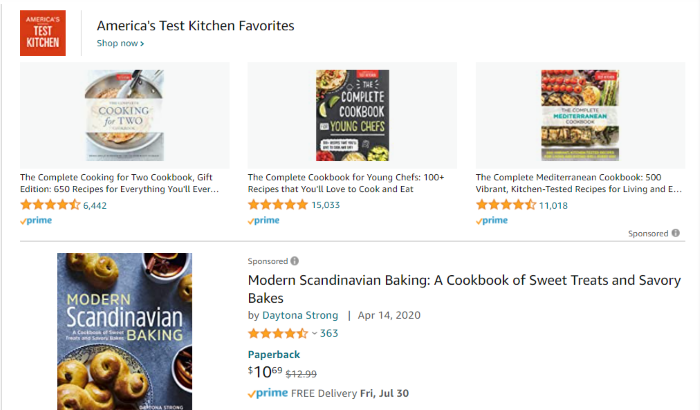
Ok, now we’re getting somewhere.
Most are unsurprisingly recipe books. However, that first one is especially interesting.
It’s a “cooking for two,” book which means the people buying it are looking for quick, no-fuss meals in smaller portions.
See?
That tells you a lot about the audience and what their preferences are. The Mediterranean one on the far right is another indication — those meals tend to be easy and healthy.
So these people might be looking for a new recipe cookbook, but that doesn’t mean they want some haute cuisine that requires working for hours in the kitchen.
Instead, these (presumably) busy people want something relatively quick and healthy.
Next, the trick is to put something together that’s like these examples but somehow different, better, or unique.
For example, let’s dive a little deeper into books reviews to see what they say.
Here’s a positive review to kick things off:
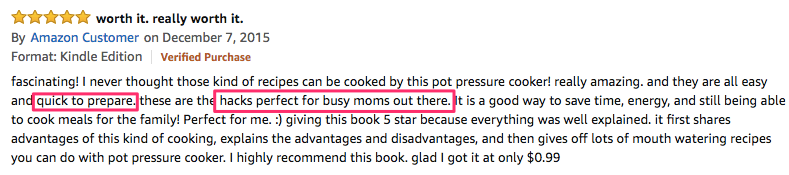
Awesome! Two of our assumptions are already being proved correct.
People like this example because it provides recipes that are “quick to prepare. “
Busy moms might be foodies. However, foodies probably aren’t going to be buying this book.
That completely changes how you might create, package, design, and even promote this ebook already.
Positive reviews are helpful to start with, but many times you can learn more from negative reviews. Check this out:
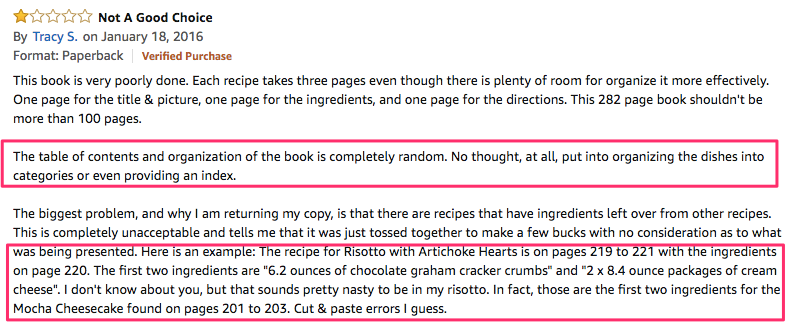
First, this book’s organization and table of contents aren’t up to snuff for this reviewer. They’re even giving you the answer here, too: “… organizing the dishes into categories or even providing an index.”
Good ideas! These are the little details that you or I wouldn’t have thought of because we might not be experts on cooking already.
However, a little bit of research has already revealed a few nuggets of wisdom.
Then, this reviewer goes on to complain about some of the editing and attention to detail towards the bottom.
Easy — let’s also have a subject-matter expert help edit this work to ensure accuracy (critical in cooking) is on point.
Use Audience Feedback to Refine Your Lead Magnet Idea
Now let’s take this one step further by simply asking the audience which versions of our idea they’d prefer.
For example, write up a simple blog post that explains what you’re thinking about creating and ask for ideas or improvements.
This does two things at the same time:
- It helps you get feedback to incorporate into the creation of your lead magnet.
- And it helps you ‘seed’ the market so that people are already primed to download it when you push the lead magnet live.
Soliciting feedback from people who aren’t yet on your email list can help you better understand how to get them on the list eventually. Here’s what I mean.
Take this post on how an Instagram user-generated more than $300,000.
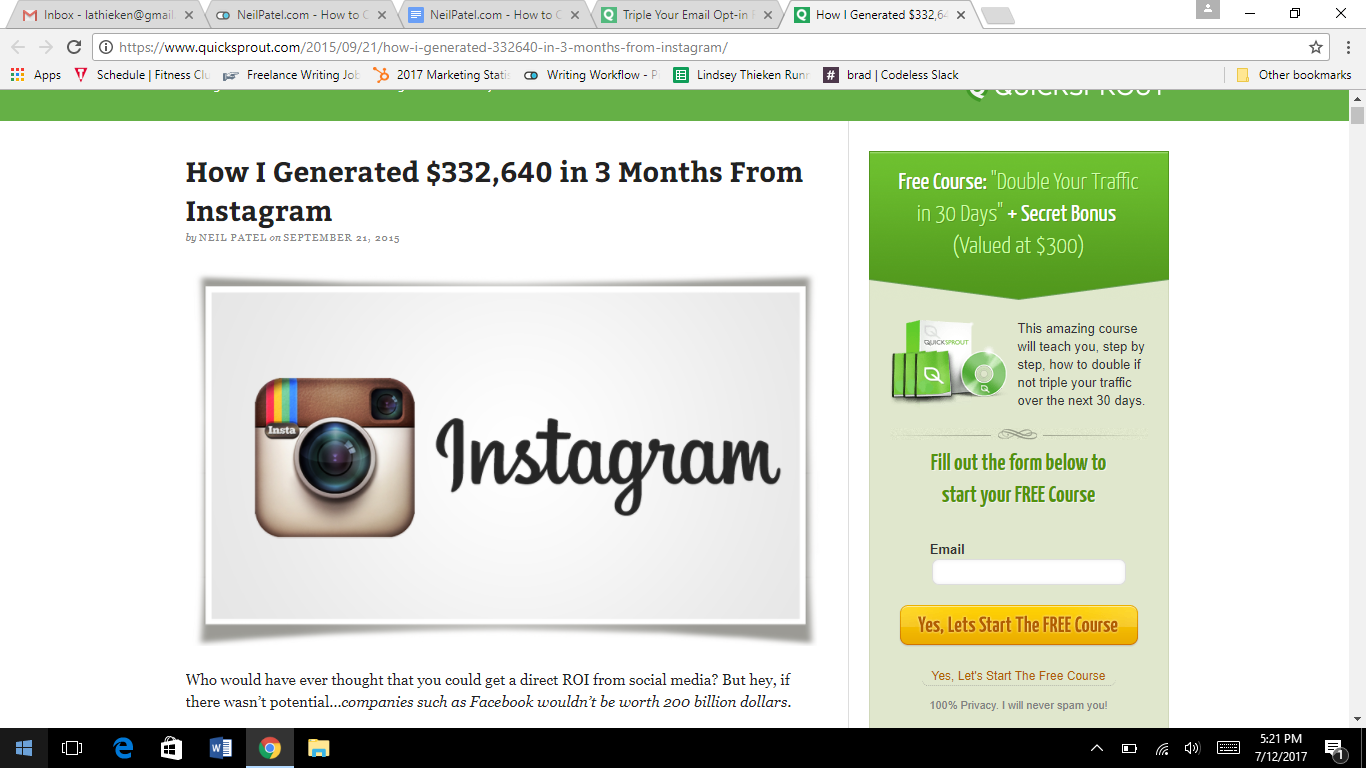
If you take a close look at the comments section of the post, you’ll find a couple of readers asking about how the Instagram user made her lists.
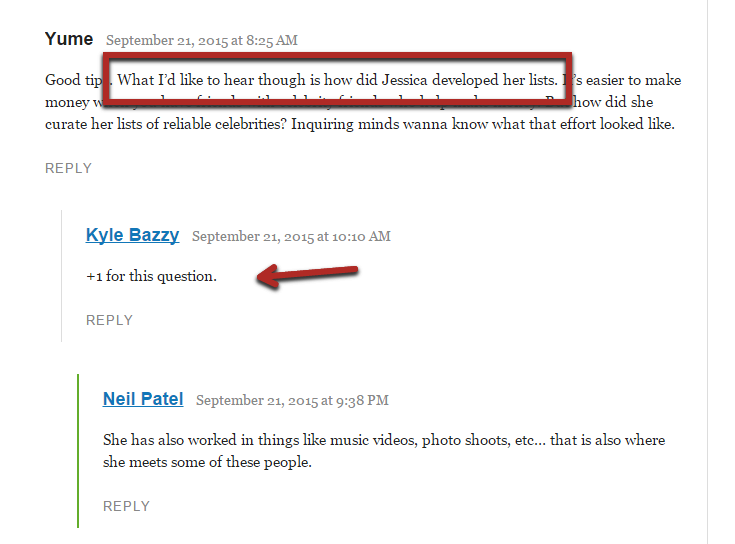
Multiple people are now requesting the same information in the comments, which means there must be built-in demand for this information.
Lead magnets are ‘free,’ but users still have to part with their precious contact info. They won’t do that for just anything.
So you need to create content that interests the audience.
Let’s check out Google Analytics to see which pages (and topics) are performing best:
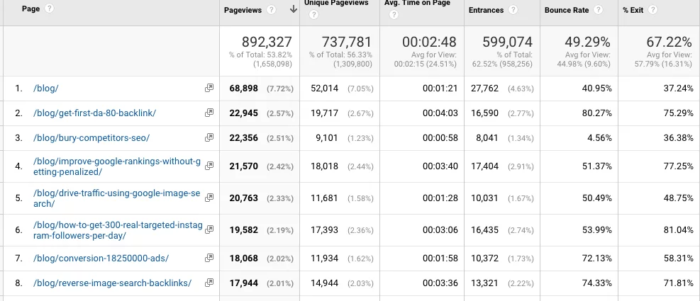
Start by segmenting all your posts into categories.
Sometimes your site already has this done if you included categories in your URL string. For example, Unbounce uses the category “PPC” in this blog post:

So you can search for URLs in your most popular content that feature PPC.
You’ve now painstakingly compiled insight into what your customers want. Your next job should be insanely easy at this point: Give them what they’re asking for!
Being Specific About The Value
Picture someone on your site reading your perfectly crafted blog post about the latest trends in European cooking when a pop-up appears offering a printable “Be a Better Cook” guide.
Huh? That generic printed piece of paper is going to make them a better cook? How?
No, thank you.
What if it was a printable checklist on the “Ten Top-Rated Dinner Recipes from France and Italy?”
Now imagine you visit the landing page for Digital Agency Day because you want to see when the upcoming date is to make sure you don’t miss any of the great information.
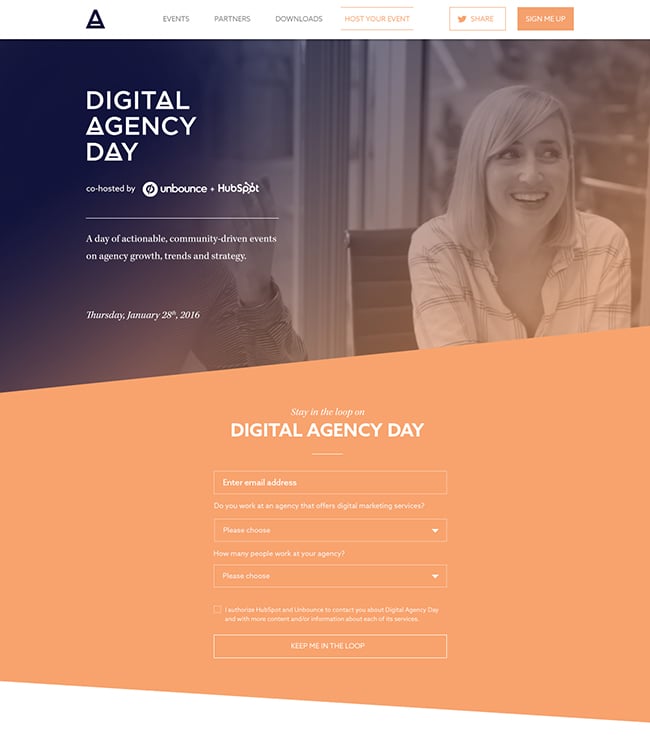
You’re hemming and hawing about signing up for the live event because you’re not sure if you’ll be able to make it.
Then an exit overlay catches you before leaving, suggesting you sign up to receive the recordings when ready:
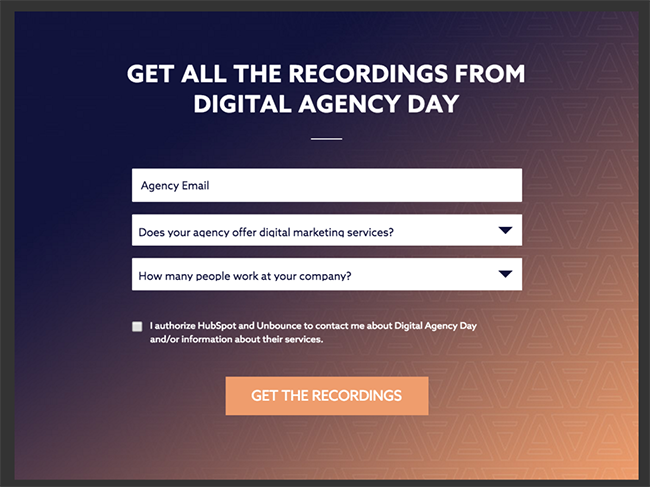
Ok, that’s something you can get behind.
It’s specific and relevant, so it immediately makes sense.
So you’ll probably hand over your email.
It’s no surprise that this example resulted in a 19.03 percent conversion rate increase.

People aren’t going to sign up for something they don’t think is useful.
For example, check out this 9-part lesson from Brennan Dunn:
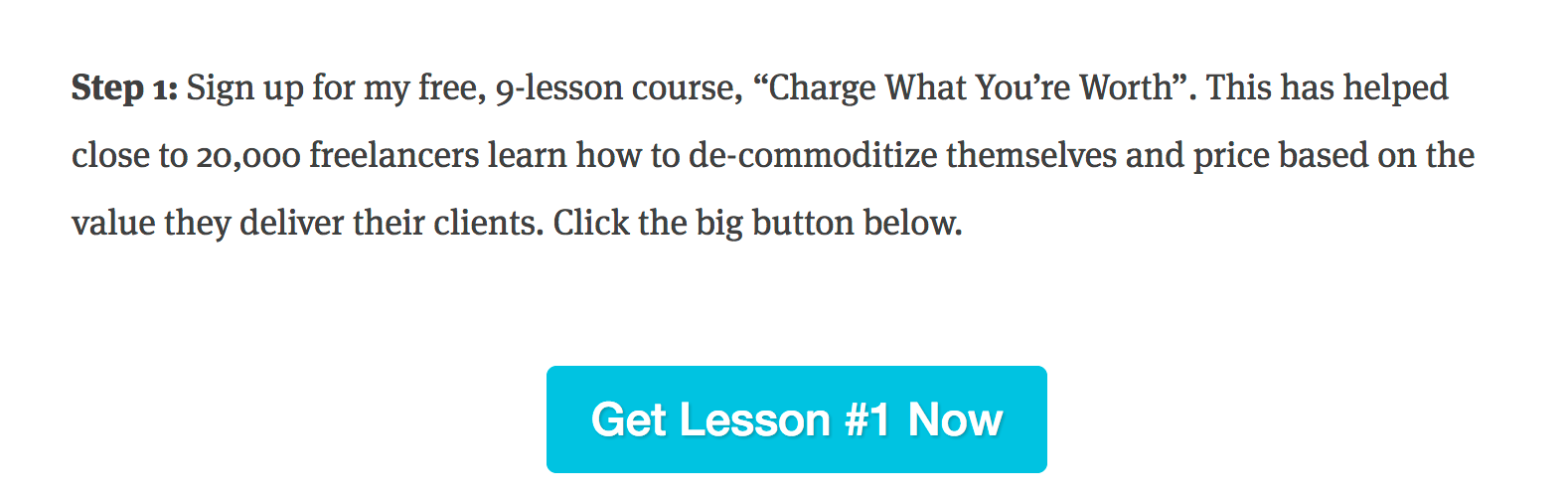
It targets a massive pain point for freelancers (“charging what you’re worth”).
It’s incredibly detailed and in-depth (“9-lesson course”).
There’s social proof that proves its value (“20,000 other freelancers”).
Brennan could easily charge for something like this, and people would still buy it.
It’s that good.
Checklists or cheat sheets can provide immediate value by giving people something they could put to use right now.
A longer multi-part course (like this example) or in-depth ebook can provide that long-term value people will reference for weeks (and months) to come.
Side-step these three issues, and you won’t just churn out another cookie-cutter lead magnet.
Instead, you’ll create a marketing asset that kicks off a long, profitable relationship with a new customer.
Design A High-Quality Lead Magnet
Remember the complaint on the first cookbook a few minutes ago? The poor organization and presentation detracted from the content and overall experience for that reviewer.
Now imagine what happens if you gave your email to get a downloadable guide filled with poor image quality and lots of typos. Same thing, right?
Unsubscribe.
The goal here is to get these users to move on from the freebie and eventually make a purchase. You can’t do that without attention to detail. You also need to show your value.
Check out this checklist from Bryan Harris of Video Fruit.
Looks pretty snazzy, right? Not just another boring rundown filled with typos.
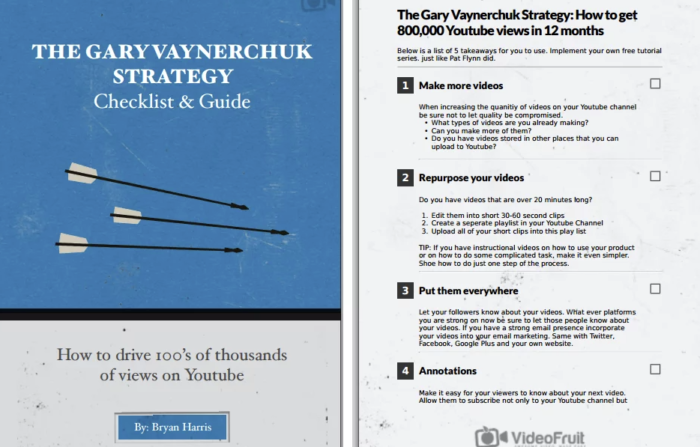
Don’t have the design skills or staffing to get this done? Hire a professional from Dribbble or Behance.
If you need a little extra help to enhance your own work, check out Beacon.
You can even hire a pro on Fiverr to do this for you, or you can do something similar by using a simple Google Doc.
FAQs
What is a lead magnet?
A lead magnet is a free offer businesses offer in exchange for contact information from prospective leads. Examples include an ebook, discount code, free course, or checklist.
What makes a great lead magnet?
A great lead magnet must be valuable to your target audience. Aim to solve a problem or make their job or life easier in some way. For example, a business coach might offer “10 things to do before your next job interview.”
How much does a lead magnet cost?
They should be free to your leads. For businesses, the costs should be for research, creation, and distribution. These consts can vary widely based on the lead magnet and resources available. For example, if you have an in-house marketing team and graphic design person, the costs would be minimal.
What are the best types of lead magnets?
The best lead magnet is one your users find valuable, which can vary by industry, business model, and target audience. Common examples include ebooks, white papers, webinards, checklists, work sheets, coupon codes, and short courses.
Conclusion
Lead magnets are one of the best ways to gather audience insight, generate leads, and even start the nurturing process to make the ultimate conversion (to revenue) easier.
Once they’ve signed up for the useful, relevant, and high-quality freebie, you establish yourself as a thought-leader on that topic and create a new customer relationship.
This means they’ll think of you when they need more information. They’ll come back for more. And they’ll come back to buy.
The good news is that these aren’t difficult to create, either. You need to take the time to dive deep into what your customers want and what they don’t want.
Then all you have to do is give them exactly what they’re already asking for.
What is your favorite lead magnet example?